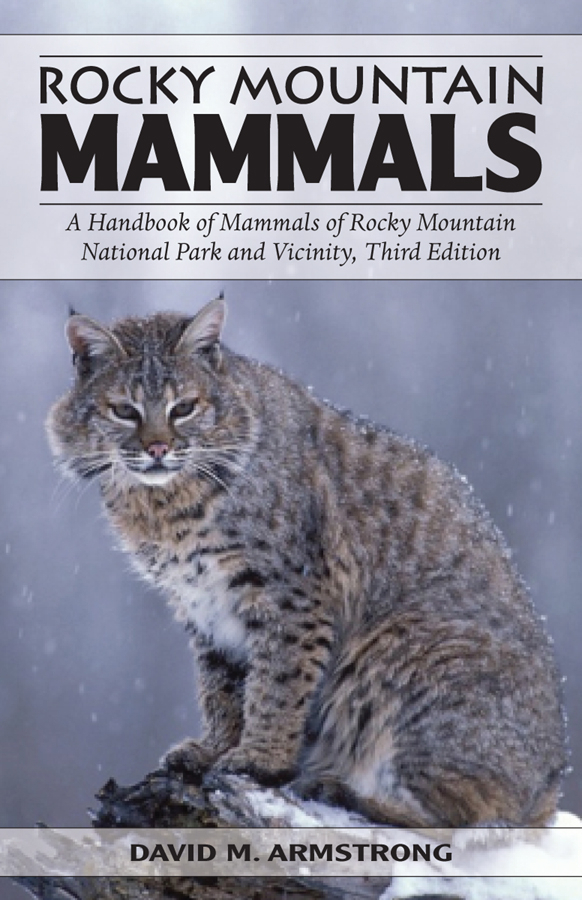
Rocky Mountain Mammals
A Handbook of Mammals of Rocky Mountain National Park and Vicinity
Third Edition
Accessibility Tools


"On the roadmap of general biology, there is an inn at the crossroads between botany and zoology, life cycle and behavior, physiology and biomechanics, and ecology and systematics. The inn is called Pollination Biology, and this book belongs in the kitchen of that in.. The book provides recipes for how to deal with whole plants, flowers, gynoecia, pollen, nectar, bees, birds, bats, butterflies, beetles, their energy budgets, foraging decisions, sensory apparati, nesting sites, and the microenvironmental factors that might affect any of these items."
—The Quarterly Review of Biology
Techniques for Pollination Biologists is the first book to incorporate all techniques published in the pollination literature as well as unpublished methods compiled from practicing pollination biologists. The bibliography includes 1,200 references from more than 200 journals, plus books and previously unpublished materials. Appendices list sources for all the equipment and chemicals needed.
This book presents basic techniques for labeling plants, manipulating flowers, marking or excluding, and designing simple but elegant experiments with small budgets as well as describing more sophisticated techniques, such as fluorescence microscopy to examine pollen tubes, high-pressure liquid chromatography for nectar analysis, and using particle counters to count pollen grains and nuclear magnetic resonance for floral odor analysis. The book also examines potential pitfalls for pollination studies and offers cautionary advice about designing and implementing different types of pollination experiments.


Third Edition

Eastern Slope, Fourth Edition
A Field Guide to the Vascular Plants

Western Slope, Fourth Edition
A Field Guide to the Vascular Plants